
My tennis background gave me a head start in pickleball, but it also taught me three common habits that can hold converts back — and how to fix them.
With its exponential surge in popularity, pickleball is attracting more athletes from other sports than ever before. The pro side of the game has former soccer, football, skateboard and basketball players. Still, players with racket sport backgrounds, specifically tennis, still make up the majority of converts in the sport.
I am one of those players. I played college tennis at the University of the South: Sewanee in Tennessee before coaching the Men’s team at Swarthmore College and then the Women’s team at the University of Georgia, where I learned how to play pickleball and became addicted.
If you are a tennis player to pickleball convert like me, here is what that transition taught me that I think most tennis converts get wrong.
Shorten your backswing
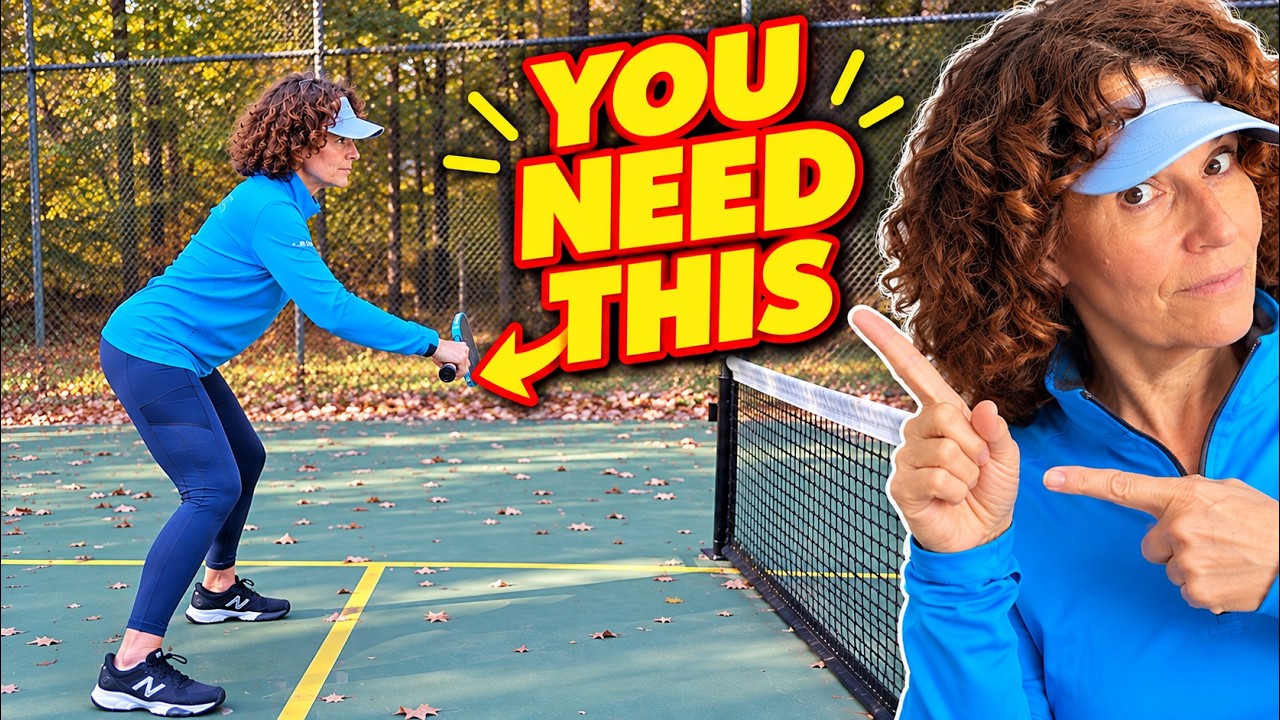
Pickleball, especially doubles, is more ping pong than tennis. Your paddle must always remain close to your body, and the larger the swing, the more likely you are to err.
This is one of the main things I see tennis players struggle with, especially at the amateur level, where the ball is moving more slowly, enabling players to take larger swings.
Tennis players love to keep their well-trained loopy topspin swings and will often yank the paddle way behind them.
As you know, timing is everything, and once you get up to the kitchen, there is almost no time to take a huge backswing. This is an especially difficult concept for baseline tennis players to grasp.
In tennis, if you predominantly played as an aggressive baseliner who did not move forward a lot, you were likely able to take larger cuts at the ball, translating to larger swings. The tennis players who are able to adapt and reduce their backswings more quickly are often the players who were comfortable moving forward in tennis, like Jack Sock and Donald Young.
One way I like to teach shorter swings to tennis players and new players is the hula hoop method:
- Imagine you have a hula hoop around your waist
- Try to hit every shot with the paddle inside the circumference of that hula hoop
- That will help keep your swing short
You can’t hit through your opponents as easily in pickleball
In tennis, hitting powerful winning shots is more common. Think of John Isner bombing 50+ aces a match. Think of Carlos Alcaraz ripping forehand winners from the baseline through his opponent, who can barely react in time.
While that is one game style in tennis, it is far less common in pickleball. First, let me acknowledge that if there is a large enough skill gap between two teams on a court, the better team will be able to hit through their opponents and overpower them.
But once that skill gap is narrower, placement and location of shots becomes much more important than power.
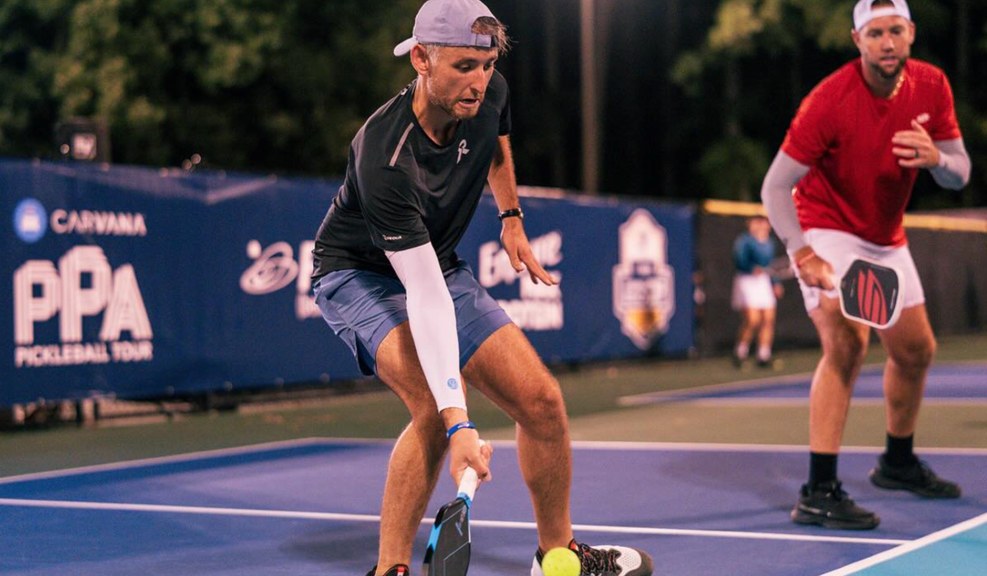
To further the example, if me and fellow PPA pro Donald Young are playing two 4.0 players, we will be able to overpower them. If Donald and I are playing Hayden Patriquin and Federico Staksrud, those same shots that were winners against the 4.0s will not have nearly the same impact.
Tennis converts almost always have natural power in pickleball. The issue becomes controlling that power and knowing when to use it. I often see tennis converts try to speed up from all areas of the court, including the baseline via the third shot drive. The converts who figure the game out faster realize they can’t speed up often from anywhere but the kitchen, and even at the kitchen more spin and placement is needed to be offensive.
 Alex E. Weaver
Pickleball shot selection is much different
This idea encompasses some of the things we have already mentioned, but tennis converts often struggle with decision making in pickleball. A lot this difficulty is a result of trying to overpower opponents and take too big of swings.
The tennis players who were good at drop-shots, lobbing, volleying and hitting angles in tennis often have an easier time converting to pickleball, where the shot selection favors these types of shots (instead of tennis power shots).
For example, my tennis game was built around hitting various spins and moving forward to the net, where I’d often hit an angle volley or drop shot volley. My drop shot from the baseline was very good as well. These shots have a direct conversion to pickleball, where the drop and reset are crucial to early success.
Tennis converts often want to drive the ball from all areas of the court, and it takes time for them to learn the importance of the third shot drop and subsequent resetting of the ball until they get to the kitchen.
Once at the kitchen, it takes more time to learn how to dink effectively, and use dinks to set up offense, which again requires shorter, more compact swings.
If you are a tennis convert, pay attention to these three common themes, and work to build a solid pickleball foundation as early as possible to help accelerate your growth.
Use your tennis background for good, instead of developing bad pickleball hygiene.
Heads up: hundreds of thousands of pickleballers read our free newsletter. Subscribe here for cutting edge strategy, insider news, pro analysis, the latest product innovations and more.
New: Professional pickleball player Eric Roddy has teamed up with Jittery Joe’s to release a new pickleball coffee – The Kitchen Brew. Whether you are hitting dinks or chasing dreams in the Kitchen, our medium roast gives you the perfect boost to power through every game. Start your day right, both on the court and in your cup!
You can purchase The Kitchen Brew on the Jittery Joe’s website.
Eric Roddy
Eric is a PPA tour pro living in Charlotte, NC, sponsored by Paddletek. In addition to playing PPA events, he teaches pickleball 2-3 hours a week, enjoys golf, and listening to his favorite band Goose.

Love Pickleball? Join 100k+ readers for free weekly tips, news & gear deals.
Subscribe to The Dink