

The lesson is simple, execution is the tricky part: control the point through positioning and technique, not through raw power
Getting absolutely demolished by hard hitters? Yeah, we've all been there. You're standing at the net, minding your own business, and suddenly someone unleashes a drive that feels like it's traveling at light speed. Your instinct is to swing harder, to match their power with your own. But here's the thing: that's exactly the wrong move.
Richard Livornese just dropped a masterclass on how to flip the script entirely.
Instead of getting pushed around by aggressive drives, you can actually take control of the point and turn defense into offense. Better still, it's not nearly as complicated as you might think.
Love pickleball? Then you'll love our free newsletter. We send the latest news, tips, and highlights for free each week.
The Power Paradox: Less Swing, More Control
Let's start with the counterintuitive part. When someone's ripping a drive at you, your natural reaction is to muscle it back.
But Richard breaks down something that separates elite players from everyone else: you don't need to swing hard when your opponent is already doing the heavy lifting for you.
This is the fundamental mindset shift that changes everything. Instead of a full swing, you're looking at extension. Think of it like catching a ball and redirecting it, not like you're trying to hit a home run. Your paddle stays flat, your wrist stays locked, and you let the opponent's power do the work. It sounds simple because it actually is, but executing it requires understanding the mechanics.
1. The One-Handed Backhand Counter: Your New Best Friend
The one-handed backhand counter is the bread and butter of drive defense. Richard emphasizes that this is the most important shot you need in your arsenal when facing aggressive hitters.
Here's what makes it work: you get low (seriously, get low), keep your paddle face flat, and extend through the ball. No wrist involvement. No shoulder rotation. Just your forearm doing the work. Your elbow bends, then straightens. That's the entire motion.
The positioning matters too. You want to aim for the back third of the court, not the net. When you do this correctly, the ball lands deep and low, making it nearly impossible for your opponent to hit a quality fifth shot. They're stuck at their feet, scrambling to get the ball up. You've just flipped the entire dynamic of the point.
Richard demonstrates this with live examples, showing how the ball placement stays consistent when the technique is sound. The key is keeping that paddle face neutral or slightly angled downward if the ball is high. If it's low, stay dead flat. This precision is what separates a floating counter from a devastating one.
 The Dink Media Team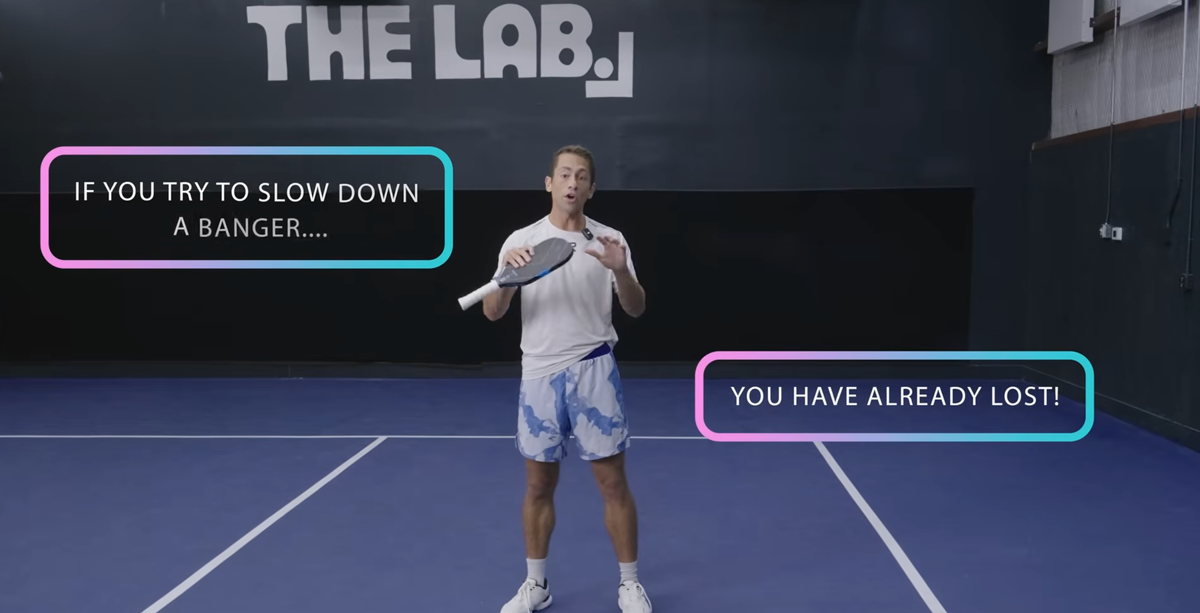
2. When to Switch to the Two-Handed Backhand
Now, the one-handed backhand works for most situations, but there are specific moments when you need to load up with both hands. This is where positioning becomes crucial.
If you're on the left side of the court, use the two-handed backhand only when the ball is in the corner. If you're on the right side, use it when the ball is anywhere on the right side of the court. The reason? You need to protect your body and maintain the ability to slide or open up if the ball pulls away from you.
When you're loading the two-handed backhand, don't start way back. Stay relatively neutral, ready to adjust. As the ball comes, take a minor backswing, go to neutral, and then extend with your left hand driving through the court. Same principle as the one-hander: you're going through the ball, not chopping at it.
Richard notes that slicing the volley when the ball gets off your body is an easy tell for opponents to crash the net. By loading the two-handed backhand in those corner situations, you maintain aggression while staying in control. If smart defense at the kitchen is your goal, the push and block strategy pairs perfectly with this technique.
 Alex E. Weaver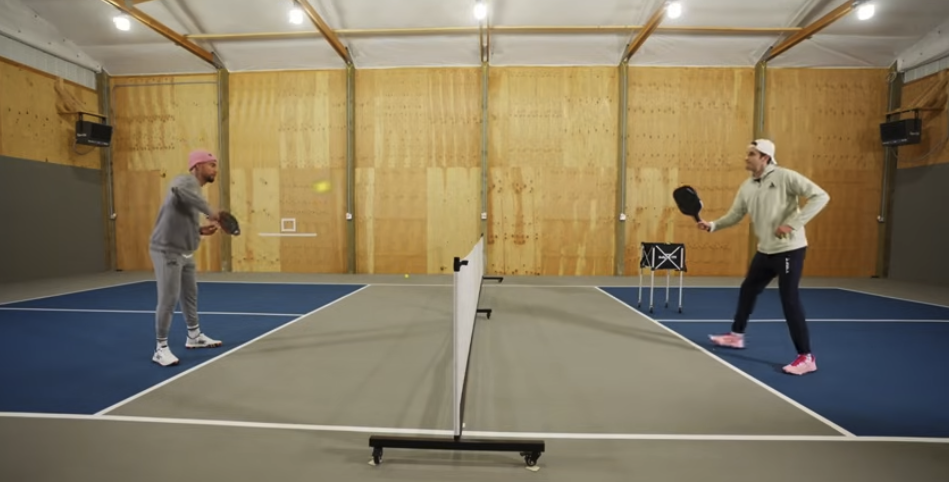
3. Packing the Middle: The Advanced Move
Here's where things get interesting. Most players don't think about this, but the top players in pickleball absolutely do: packing the middle.
When someone drives from the corners, it's straightforward. You know where to position yourself. But when the ball comes from the middle or slightly to either side, that's where players get caught. The solution? Commit to your backhand.
Instead of trying to guess whether you should hit a forehand or backhand, just take everything as a backhand when it's in the middle. Slide into the middle of the court, stay aggressive, and focus on extension rather than worrying about opening or closing your paddle face. If the ball pulls way over to the forehand side, sure, you might need to open up. But for most middle balls, you're taking them as backhands.
This positioning allows you to be more aggressive overall. You're not standing in no-man's-land trying to cover everything. You're committing to a strategy that protects the highest-level threat first, which is the drive. Players who struggle here often hit the common mistakes that cause plateaus at their current rating level.
 The Dink Media Team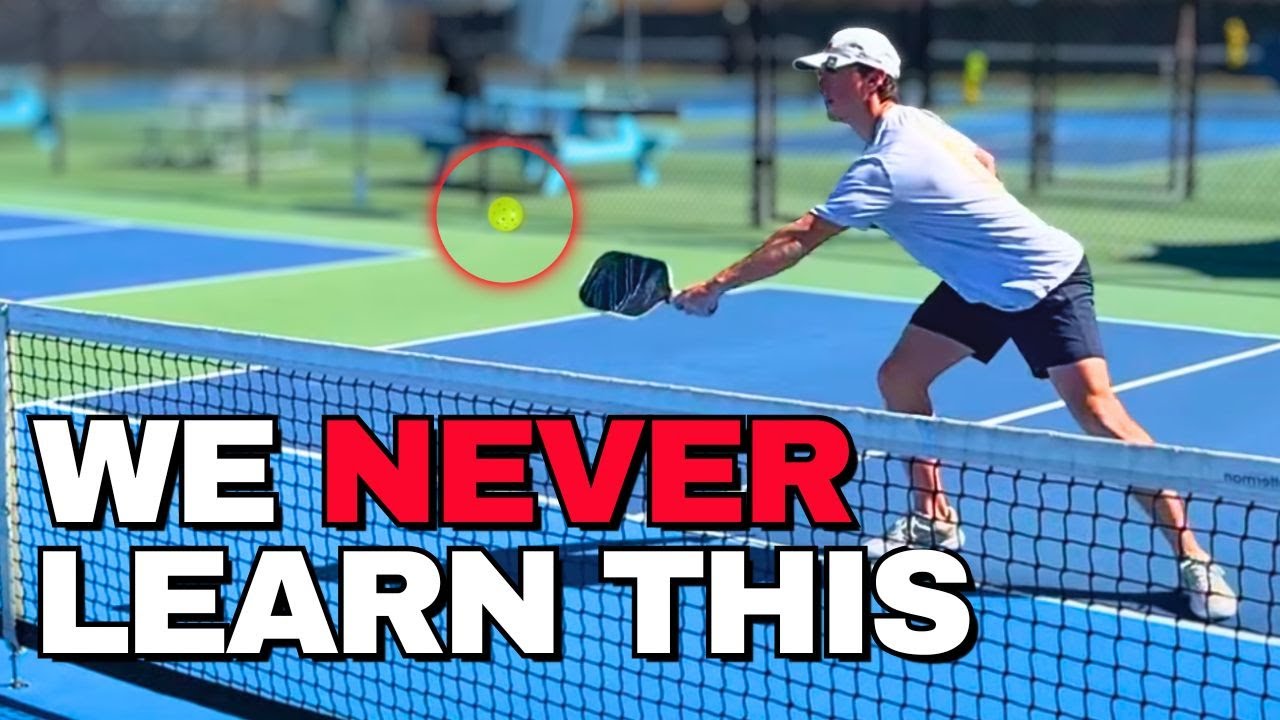
The Bigger Picture: Why This Matters
What Richard is really teaching here is a fundamental principle of pickleball strategy: control the point through positioning and technique, not through raw power. The players who dominate at higher levels aren't necessarily the strongest hitters. They're the ones who understand how to use their opponent's power against them.
This approach also builds confidence. When you stop getting pushed back and start controlling the rally, your entire game changes. You're no longer reacting; you're dictating. And that psychological shift is just as important as the technical one.
According to CBS Sports coverage of the sport's growth, pickleball's rapid rise means more and more hard hitters are flooding recreational courts — which makes this kind of drive defense not a luxury skill, but a necessity.
Heads up: hundreds of thousands of pickleballers read our free newsletter. Subscribe here for cutting edge strategy, insider news, pro analysis, the latest product innovations and more.
If you're getting crushed by hard hitters, the solution isn't to hit harder. It's to hit smarter. Master the one-handed backhand counter, know when to switch to the two-handed version, and learn to pack the middle. These three techniques form the foundation of elite-level drive defense.
For a deeper look at what separates good players from great ones, check out how smart shot decisions beat power in advanced pickleball — the mindset described there reinforces everything Richard teaches in this breakdown.
Frequently Asked Questions
What is the best way to defend against a pickleball banger?
The best defense against a pickleball banger is not to match their power, but to redirect it. Use the one-handed backhand counter with a locked wrist and flat paddle face, letting your opponent's drive do the heavy lifting. Aim deep into the back third of the court to force them into a tough fifth shot off their feet. The key mindset shift is from "hit harder" to "hit smarter."
When should I use a two-handed backhand instead of one-handed against drives?
Switch to the two-handed backhand when the ball is in the corner on your left side, or anywhere on the right side of the court when you're playing on the right. The two-hander gives you more body protection and lets you stay aggressive in those wider positions. For middle balls, the one-handed counter is usually the better choice because it gives you more flexibility to adjust.
What does "packing the middle" mean in pickleball?
"Packing the middle" means committing to your backhand side when drives come to the center of the court, rather than hesitating between a forehand and a backhand. You slide to the middle, take the ball as a backhand, and focus on extension. This removes decision-making under pressure and lets you stay aggressive instead of scrambling. Top players use this positioning to eliminate the hardest shot selection problem in drive defense.
Why does swinging harder at drives make things worse?
When you swing hard at a drive, you add your own power to an already fast ball, which dramatically reduces your control and increases the chance of an error. A full swing also involves wrist and shoulder rotation that opens the paddle face, sending the ball high or wide. A controlled extension — paddle flat, wrist locked — is far more reliable because you're redirecting energy, not creating it. Elite players call this letting the opponent's power do the work.
Does this drive defense strategy work at all skill levels?
Yes — the one-handed backhand counter, two-handed positioning, and packing the middle are applicable from 3.5 to 5.0+ play. The mechanics are fundamentally sound and scale with skill level. At lower levels, the technique alone gives you a significant edge over players who just muscle the ball back. At higher levels, the precision of your extension and ball placement is what separates a good counter from a great one.

Love Pickleball? Join 100k+ readers for free weekly tips, news & gear deals.
Subscribe to The DinkGet 15% off pickleball gear at Midwest Racquet Sports