USAP Fixed the Spin Test, but the Bigger Certification Problem Remains
Stewarding a sport and certifying its equipment are two different jobs, and right now they demand two different answers.
Last week, USA Pickleball announced its long-awaited Spin Rate Test. Starting October 1, paddles will be measured by actual ball rotation and the RPM they produce, with a cap of 2,100.
If that number sounds familiar, it should. It's the exact threshold UPA-A has enforced since it launched output-based spin testing.
I want to be clear about what just happened, because it matters for every player deciding what stamp to trust. For years, the split between the two bodies came down to philosophy.
- USAP regulated what a paddle is – surface roughness, measured with a profilometer/Starrett surface roughness meter.
- UPA-A regulates what a paddle does – spin output produced by the paddle.
Our Power 2 paddles were certified by UPA-A, and our HexGrit surface is the reason people assume that's a dodge: it reads rougher than USAP allows, while its measured spin sits under 2,100 RPM. Banned for what it's made of. Legal for what it does.
Last week, USAP conceded the philosophical argument. Measuring output is the right way to regulate spin. Same number and everything.
So why aren't we sprinting back to the USAP list? Because the test is only one piece of a certification regime. And on the regime, the gap didn't close last week. It got wider.
Certification shouldn't be a lifetime appointment
Here's the detail in USAP's announcement that most players will miss: paddles are held to the standards of the period in which they were certified.
The Spin Rate Test applies to paddles certified after October 1. Everything already on the list stays on the list, judged by the old rules, indefinitely.
UPA-A certification expires. Every two years, a paddle comes off the list unless it's resubmitted and passes again – against current standards, not the standards of whenever it was first certified.
Think about what that difference means in a sport where paddle tech moves this fast.
- Under a certify-once model, the approved list is a museum – layers of paddles approved under different rules at different times, all carrying the same stamp.
- Under a recertification model, the stamp means one thing: this paddle passes today's test.
A standard that grandfathers forever isn't a standard. It's a snapshot.
It's only a matter of time before someone breaks the spin test, especially without break-in testing.
Will those be grandfathered in forever?
 Alex E. Weaver
Test the paddle you'll actually be holding
The second gap is when and how the paddle gets tested.
USAP tests paddles fresh. UPA-A's testing includes destructive testing, in which paddles are mechanically broken in, stressed to simulate real wear, and measured after the break-in process. The paddles they test don't come back. That's the point. A paddle that's legal in week one and illegal in week ten was never legal. It was just new.
This sport has already paid full tuition for that lesson. The JOOLA Gen 3 passed USAP fresh, sold by the thousands, and was delisted when the retail paddles played hot after break-in. Cores broke. Refunds, lawsuits, the whole mess. A fresh-sample test will never catch that. A break-in test is built to catch exactly that.
 Alex E. Weaver
And it's not hobbyists running these tests. UPA-A's lab partnered with UMass Lowell — the same sports science team that did bat and ball testing for Major League Baseball for years.
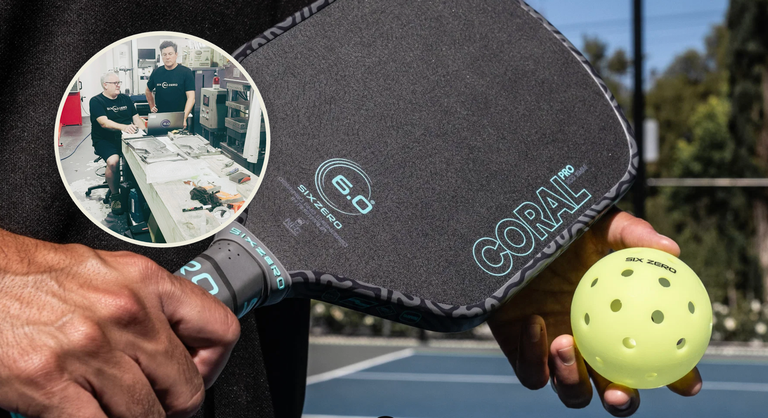
I've visited the lab and met the people running it. They love this sport and care about where it's headed. They spend time and money researching all of it, including how balls interact with the paddle, how they soften on repeated hits, and how that affects the testing itself.
The OWL story, and why output testing is harder to bend
If you want to know why the testing method matters and not just the threshold, read the reporting that came out this week on the OWL paddle.
Here's what USAP confirmed, on the record: the OWL's surface couldn't be measured by their roughness test, so the roughness requirement was waived. The approval was provisional. And that provisional status was kept internal for over two years while the paddle was marketed as 100% approved.
Meanwhile, independent testing put the OWL at the top of the field for spin, growing as it breaks in. Meanwhile, smaller brands sit on USAP's public compliance page under investigation for exceeding surface roughness.
 Alex E. Weaver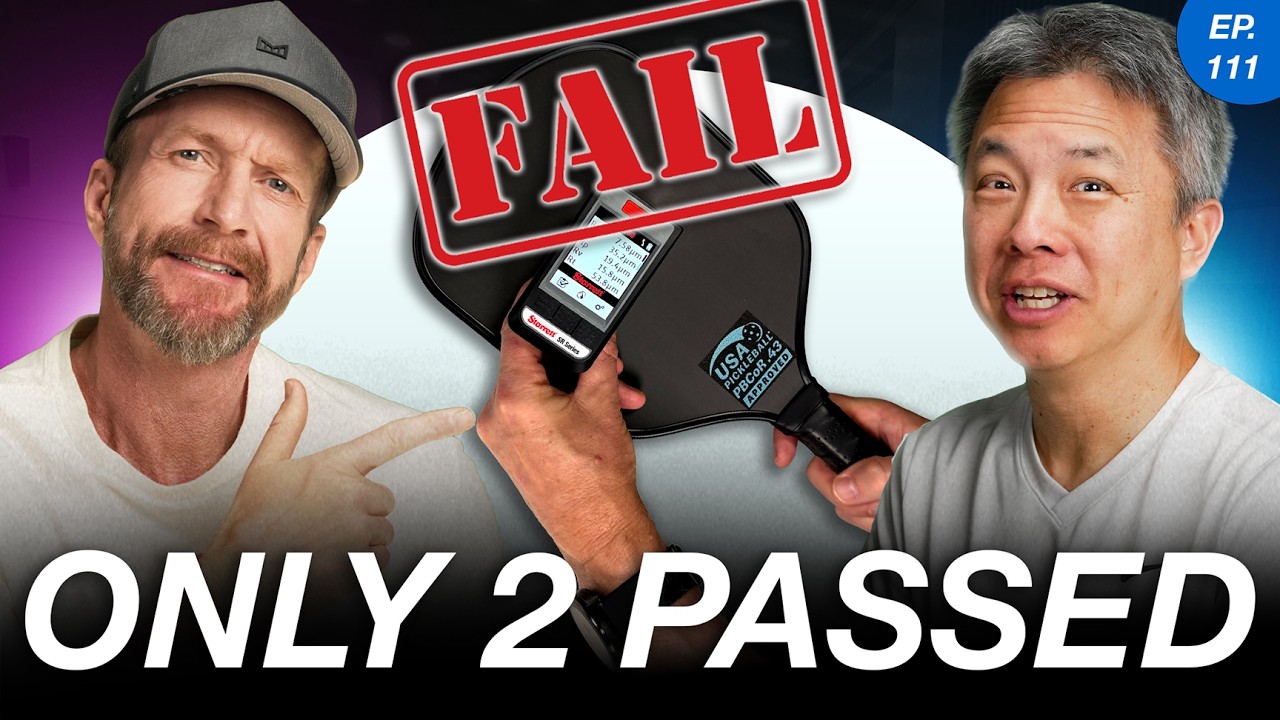
Sit with that.
The same roughness test that keeps HexGrit off the USAP list, a surface whose measured spin is legal, was quietly set aside for one company, for years, through a lane no other manufacturer knew existed.
Let's pause on how absurd that is. USAP waived its own certification standard for one company, the same standard it was actively enforcing against everyone else and told no one. Not the players buying the paddle. Not the brands being investigated for exceeding the exact test that got waived. A relief lane nobody can see is a relief lane nobody else can ask for.
If I'd walked into USAP with HexGrit and asked for the OWL's deal – "Your test can't measure my surface, so skip it" – what do you think they'd have said? I never got to ask, because the lane didn't exist publicly.
That's not a standards body making a hard call. That's a standards body picking who the standards apply to. This should raise the question of who else was given a pass.
I was a skeptic, for the record
The early days were bumpy, and I said so at the time. I even signed the infamous Selkirk letter. A new governing body with real fees, tied to the pro tours,;I had the same doubts you might.
Then I spoke with Jason Aspes over a few months and got direct answers instead of spin. I visited the lab and met Gary, Kayla, Matt, Lisa, and the team. I went through certification myself. Nonprofit status is in the works by the end of 2026.
Somewhere in there, the skepticism ran out of material. The process has smoothed out, the people are serious, and they answer their critics on the record. That's more than I can say for a standards body that grants secret exceptions.
 Alex E. Weaver
What does it mean for you?
- UPA/PPA Pro event (PPA, MLP)? UPA-A certification.
- Local tournaments: Most are allowing both certifications, with a few exceptions
- USAP-sanctioned amateur event? The exact model has to be on the USAP list, and now it matters when it was certified, because pre-October paddles never faced the spin test.
- Local or rec play? Play with what your heart desires as long as your community allows it. I do think you should play with an approved paddle, though.
The question isn't "Is it approved?" anymore. It's "Approved by whom, tested how, and when?"
Where do we go from here?
Let me say something plainly, because this piece has thrown some punches: USA Pickleball has been a genuine steward of this game.
The rulebook, the grassroots programs, the growth of amateur play: that's fifteen-plus years of real work, and the sport we all love exists in large part because they did it. The new spin test is that same commitment showing up again, and I mean that.
But stewarding a sport and certifying its equipment are two different jobs, and right now they demand two different answers.
On certification, UPA-A has built the program the sport requires – destructive testing, a two-year clock on every stamp, a lab full of people who did this for Major League Baseball, ongoing research and development. That's where we certify, and if USAP's testing keeps evolving toward that bar, you may one day see our paddles on both lists. This was never about sides.
"By players, for players" isn't a tagline if you only mean it when the test is easy. We build for the player holding the paddle in month twelve. We certify with whoever tests for that player best, and today, that's UPA-A.
 Alex E. Weaver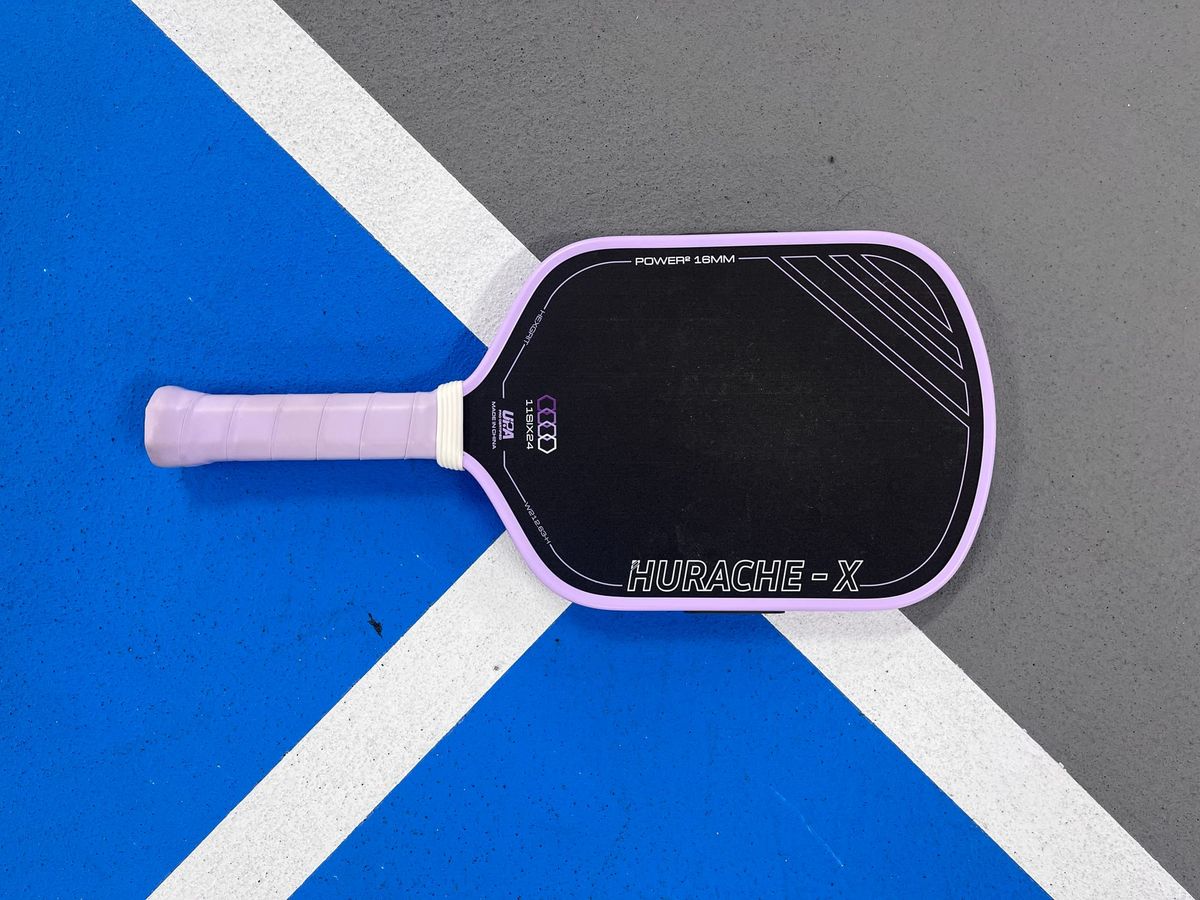
[Editor's note: This is a guest article. The Dink does not necessarily agree with any or all opinions provided above.]
Love Pickleball? Join 100k+ readers for free weekly tips, news & gear deals.
Subscribe to The Dink